If such a thing as ‘The Great Australian Novel’ exists, then Tim Winon’s Cloudstreet must be regarded as a worthy candidate for the title. Published in 1991, and set in Perth between the years of 1943 and 1963, the novel chronicles the lives of two poor families driven by circumstance to share a single dwelling, a large weatherboard (and weather beaten) mansion at Number One, Cloudstreet.
The novel is deeply Australian, not only in the idiosyncrasies of its language and its characters, but more so because it is a story concerned with Australian identity and belonging. Cloudstreet is a story, in other words, that ought to provoke its readers to ask the sometimes uncomfortable and politically incorrect question of what it means to be Australian.
The house itself sets the stage for the drama of the novel. Owned initially by a wealthy woman who “cheated several people in order to get it”, the house is spiritually haunted by the suicide of an indigenous girl and the sudden death of its owner. The house is described in the opening chapters, as a “great continent” that “doesn’t belong” to the inhabitants, a living, and often antagonistic, force throughout the novel.
Cloudstreet begins with the forced migration to this house of the two principal families, the Lambs and the Pickles. Both families are essentially driven out of their previous homes in the rural settings of Margaret River and Geraldton by tragedy. For the Pickles these circumstances include the crippling of their patriarch, Sam Pickles, and the death of their wealthy cousin upon whose beneficence they had relied. For the Lambs, their move to Perth is provoked by the drowning of their son, the ironically named ‘Fish’ Lamb, whose resuscitation has left him mentally disabled.
Yet while Pickles and Lambs share the experience of dislocation rooted in trauma, they otherwise occupy opposite expressions of working-class culture. Sam Pickles is a gambler and an alcoholic, the archetypal bludger and larrikin, obsessed by the mysterious workings of luck, or in his own terminology, the “shifty hand of God”. On a perpetual losing streak he is nonetheless a lovable character (at least to those who need not rely on his work ethic or virtue to survive).
The counterpart of Sam Pickles is Oriel Lamb, the indominable embodiment of industriousness and determination in the face of poverty and tragedy. She is a woman who personifies constancy, morality, and sheer will, but is also a woman who is incapable of showing weakness or feeling. She is a character who alienates others even through her acts of service.
Forced together, these opposing familial cultures create an uneasy truce beneath the roof of their unwanted shared dwelling. Meanwhile, the characters set about trying to create a life where they might enjoy a new sense of identity and belonging.
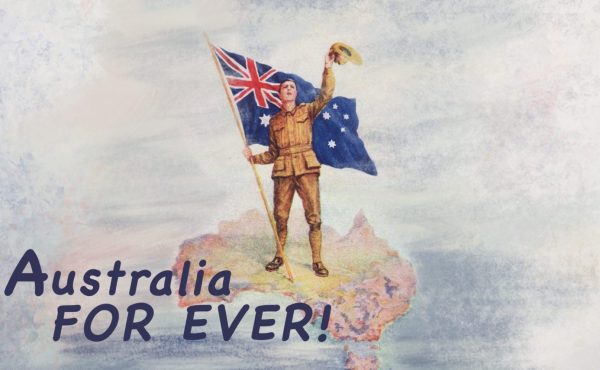
Bereft of their faith in God following the (incomplete) resuscitation of Fish, the Lambs are driven to root their identity in something other than religious belief. For a time, this identity is found in the nationalism of the ANZAC mythos, in anticommunism and service at the RSL hall.
Yet this new religious calling is not enough to hold onto the oldest Lamb boy, Quick. Consumed by survivor’s guilt following the near drowning of Fish, Quick attempts to flee his past to start over, leaving Cloudstreet for the country where he drifts about as an itinerate shooter. On the other side of the fence, the oldest Pickle child, Rose Pickle, tries to escape Cloudstreet, and with it the lucklessness of her father and her mother’s inveterate unfaithfulness, through a relationship with the university educated, Tony Raven.
As the novel progresses to the 1960s, the construction of post-war suburbs seems to offer another avenue of escape to a place untouched by past lives or trauma. The new suburbs are sterile and neat, their houses are detached and separated by fences. They are an architectural expression of a sort of post-history existence without conflict and clear of messy entanglements with others. They offer, in other words, a possibility of a life lived entirely on one’s own terms.
Yet, for the novel’s principal characters, escape from Cloudstreet can never properly eventuate. The house’s bloody and tragic past, the forced migrations, the intergenerational trauma, the survivor’s guilt, and the sin and personal failings cannot be simply escaped. Or, at least, they cannot be escaped without paying the price of one’s own identity and sense of belonging.
Cloudstreet tugs on some of the most enduring threads of Australia’s national identity. Indigenous dispossession, migration, ‘the lucky country’, the ANZAC spirit, working-class culture, and post-war affluence are all ‘tropes’ of Australian identity which appear in the novel. Yet Winton’s genius is the way in which each of these cultural myths are complicated by the lived experience of his characters.
Migration, for instance, has become a battleground of national identity across much of the Western world since Cloudstreet’s publication in 1991. We are used to narratives that either celebrate or alternatively condemn migrates and migration. Little time is spent uncovering the violence and trauma that has precipitated migration since Australia was first colonised.
Likewise, Australia’s characterisation as ‘the lucky country’ might easily be celebrated today after a generation of economic prosperity, forgetting (as Sam Pickles might remind us) that luck can as easily turn for as against you. And forgetting, for that matter, that individual Australians are the biggest gambling losers per capita on the planet.
But Cloudstreet also offers a blueprint to national unity and exorcism of past traumas in the eventual coming together of the Lamb and Pickle families. It is in the shared familial experiences of birth, death, and most especially marriage, that a common culture is constructed. And this is (or at least can be) the work of ordinary families quite apart from governmental policy, the media, or corporate profit making.
Cloudstreet has received its share of accolades since its publication, but if there is a common criticism of the novel, it is that it is nostalgic. Or, in other words, the accusation that the novel is a celebratory treatment of an Australian way of life that no longer exists and that when it did was exclusory of cultural and sexual minorities, the indigenous, women, and (presumably) those who write cultured book reviews.
Cloudstreet may well prove a challenging text for cosmopolitan Australians who seem to have spent the better part of the last few generations living as ‘post-historical’ global citizens, where a distinct national identity is, at best, unfashionable and, at worst, a stepping stone to ethno-nationalism. But I began with the claim that Cloudstreet could be considered ‘The Great Australian Novel’. If this claim is to be taken seriously, then the novel must offer something of enduring relevance to its readers. And, at a time when Australian identity feels less defined and more contested than any other time since Federation, it seems to me that we could do worse than open the pages of this Tim Winton classic.