We don’t talk enough about pride anymore. Or (to be a little more specific) we don’t tell enough stories about pride. This is a cultural blind spot peculiar to our contemporary Western culture for, the further back in time one travels, the more preoccupied it seems are the cultural stories and myths with the theme of pride.
Hubris, excessive pride or a dangerous overconfidence and arrogance is, for instance, the quintessential theme of Greek myth and theatre. While not every tragic hero might suffer from hubris, the theme was as pervasive in Greek storytelling culture as the theme ‘believe in yourself’ is currently pervasive in the storytelling of Hollywood.
Hubris is, for instance, the undoing of the titular character of Sophocles’ tragedy Oedipus Rex. The play begins with Oedipus, king of Thebes, believing that he has escaped his prophesised fate (that he will kill his father and marry his mother). As the action of the play uncovers, it is Oedipus’s attempt to outwit fate that has ironically led him to fulfilling the very prophecy he sought to escape.
In the fatalistic world of Oedipus Rex, Oedipus’s hubris is his presumption that one’s actions have meaningful consequence in a deterministic world. Oedipus’s hubris is displayed first by his attempted escape of his fate, and second, in his presumption that he governs Thebes not through the vagaries of fortune but through his ability and moral character. His fall from fortune to disgrace is a dramatic treatment of the famous saying attributed to Solon, “Call no man happy until he is dead” and a reminder that man’s actions are insignificant compared to the will of gods and of fate.
A preoccupation with hubris extends far beyond the cultural world of Ancient Greece. It characterises many of the heroes of Shakespearian tragedy, though the influence of some hundreds of years of Christianity theology has modified its meaning, as we shall see. Christians, who understand every human choice as a step upon the path of damnation or sanctification, cannot view human choices as bereft of meaningful consequence. Moreover, for Christians suffering itself can be afforded a transcendent meaning upending worldly assessments of a fortunate (or unfortunate) life.
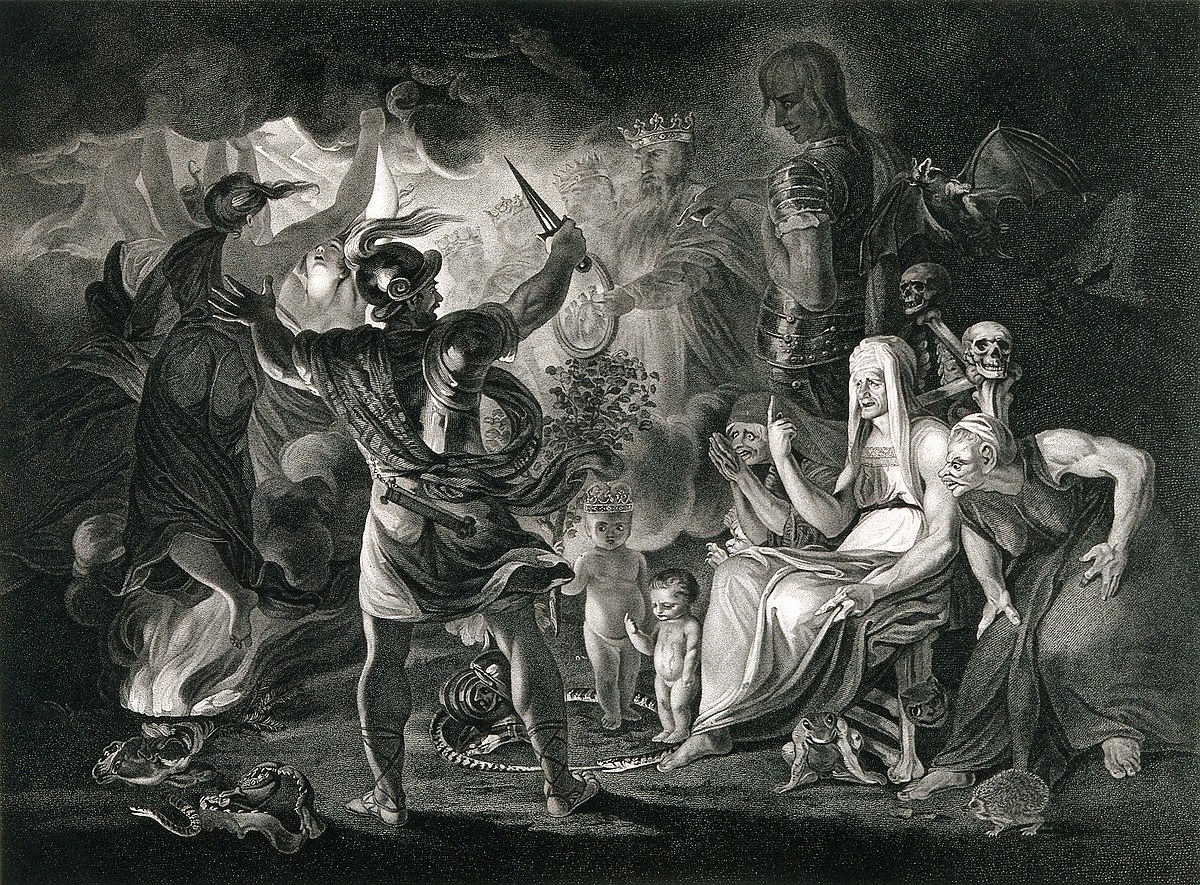
Yet, Shakespeare’s tragic heroes can be characterised as hubristic in that they presume to a power over their lives that is proper to God alone. Such, at least, appears to be the character flaw of Macbeth whose story, in some important respects, parallels that of Oedipus. Both Macbeth and Oedipus Rex are, for instance, structured around a prophecy and in both plays, it is the characters’ response to these prophecies that drives the action of the play. For Oedipus, as we have seen, this prophecy was that he would murder his father and marry his mother. For Macbeth, his prophecy is that he will become king of Scotland.
Yet there is an important structural difference between Oedipus Rex and Macbeth. When the action begins in Oedipus Rex, the prophecy has (unknown to the characters) already been fulfilled. As befits a fatalistic world, upon the play’s inception, Oedipus is inescapably a parricide and an incestor. His actions in the play are limited to discovering the truth of his condition and recognising the futility of attempting to escape fate.
On the other hand, the prophecy in Macbeth is made while Scotland’s king, Duncan, is still alive. In ominous coincidence immediately following the prophecy, Macbeth and his wife learn that Duncan is to spend the night under their roof and in their power. Lady Macbeth instantly grasps the opportunity at hand in her dire pronouncement, “The raven himself is hoarse that croaks the fatal entrance of Duncan under my battlements.” Yet the actions (or non-action) of Macbeth and his lady are neither inevitable nor forced.
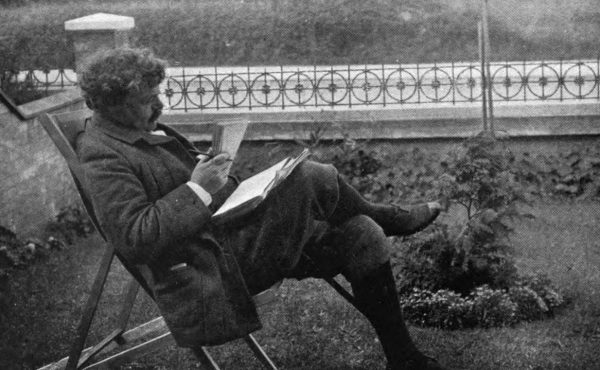
Macbeth himself shows a remarkable introspection, worthy of the Delphic maxim, “Know thyself” as he dissects his motivations for killing Duncan concluding that “only vaulting ambition” leads him to murder and saying to his wife “we will proceed no further in this business”. And, as he reaches this conclusion, there is a palpable sense that Macbeth is truly free to choose to do nothing. Of course, the play would not be a play were not Macbeth overruled by his wife and redirected towards the murder of Duncan, yet it is clear Macbeth possesses a freedom fundamentally different from Oedipus. The English writer, G. K. Chesterton puts it thus, “You cannot call Macbeth anything but a victim of Macbeth. The evil spirits tempt him, but they never force him; they never even frighten him, for he is a very brave man.”
Macbeth’s hubris is thus unlike the hubris displayed by Oedipus. Unlike his Greek counterpoint, Macbeth’s actions have consequence. He is slave to neither circumstance nor fate. Instead, Macbeth’s destructive hubris is his belief that he can escape the consequences of his freely made choice. His hope that the blow struck against Duncan “might be the be-all and the end-all here”, and that his bloody ascent to the throne might lead to legitimate rule and leave his moral character unscathed.
Thus, Macbeth is, in some sense, the mirrored opposite of Oedipus. Oedipus errs, as all Greece’s tragic heroes must, in presuming that his actions consequential. Macbeth errs in presuming that his freely chosen actions might be free of their natural consequence.
As Macbeth discovers however, human freedom does not extend to controlling the effects of our actions either upon others or on our own moral characters. Macbeth’s first murder is a drawn-out affair replete with psychological trauma and an agonised conscience. His second (and subsequent murders) come much more easily. The paradox of freedom embodied by Macbeth is that evil choices quickly erode the freedom with which they are made. By the play’s end, Macbeth’s character has completely disintegrated leaving a nihilistic husk roaming the battlefield aware that his cause is hopeless but choosing to kill as many of his opponents as he can before the end.
The pride of Macbeth is a sort of Christian hubris. Hundreds of years of Christian theology have imprinted on Western culture a belief in free will, but we would still presume for ourselves a god-like power to choose our both our actions and (separately) the meaning and consequence of these actions.
For a historical parallel to the tragedy of Macbeth, I will turn again to Chesterton.
“I have often wondered that no one has made so obvious a parallel as that between the murders of Macbeth and the marriages of Henry VIII. Both Henry and Macbeth were originally brave, good-humoured men, better rather than worse than their neighbours. Both Henry and Macbeth hesitated over their first crime — the first stabbing and the first divorce. Both found out the fate which is in evil — for Macbeth went on murdering and poor Henry went on marrying. There is only one fault in the parallel. Unfortunately for history, Henry VIII was not deposed.”