The following is an entry in the “Churches of the Wheatbelt” series. An introduction to the series can be read here.
In January of 1846 a party of Catholic missionaries lead by the Benedictine monk Rosendo Salvado landed in Fremantle, Western Australia. Their destination, the Swan River Settlement, had been colonised by Europeans less than twenty years prior who had only just begun to penetrate the vast interior of the new ‘Colony of Western Australia’.
Salvado’s purpose was to establish a mission to the indigenous people of Western Australia. To that end he travelled northeast of the Swan River, beyond the frontier of European settlement, where a mission called ‘New Norcia’ (in honour of the birthplace of St Benedict) was eventually established.
Salvado himself was an extraordinary figure in the history of Western Australia. An accomplished musician and pianist, a well-known story from his life was a recital to raise badly needed funds for the mission in 1846 which Salvado played in tattered robes as these were all he had to wear.
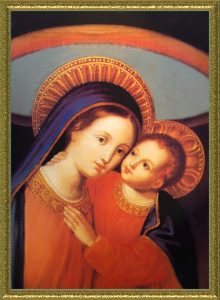
Another story from the early history of the mission relates to an image of Our Lady of Good Counsel. This painting was given to Salvado before his journey to Australia by Saint Vincent Palotti. When the mission was threatened by bushfire, Salvado and monks placed the image in front of the flames. An unprecedented wind change diverted the fire and saved the mission.
By all accounts a humble and saintly man, Salvado was also remarkably well-grounded (particularly in contrast to his often far more highly strung contemporaries). Twice appointed bishop of an Australian See (once to the failed settlement of Port Essington and once as coadjutor of Perth), Salvado eventually convinced Vatican authorities that his vocation lay with the indigenous people and in 1867 he was appointed Lord Abbot of New Norcia.
Salvado died in 1900 while visiting Rome. Three years after his death, his body was returned to New Norcia where he lies buried in the abbey church. In 1977 an English translation of his memoirs was published which is still in print. I highly recommend it (particularly to Western Australians).
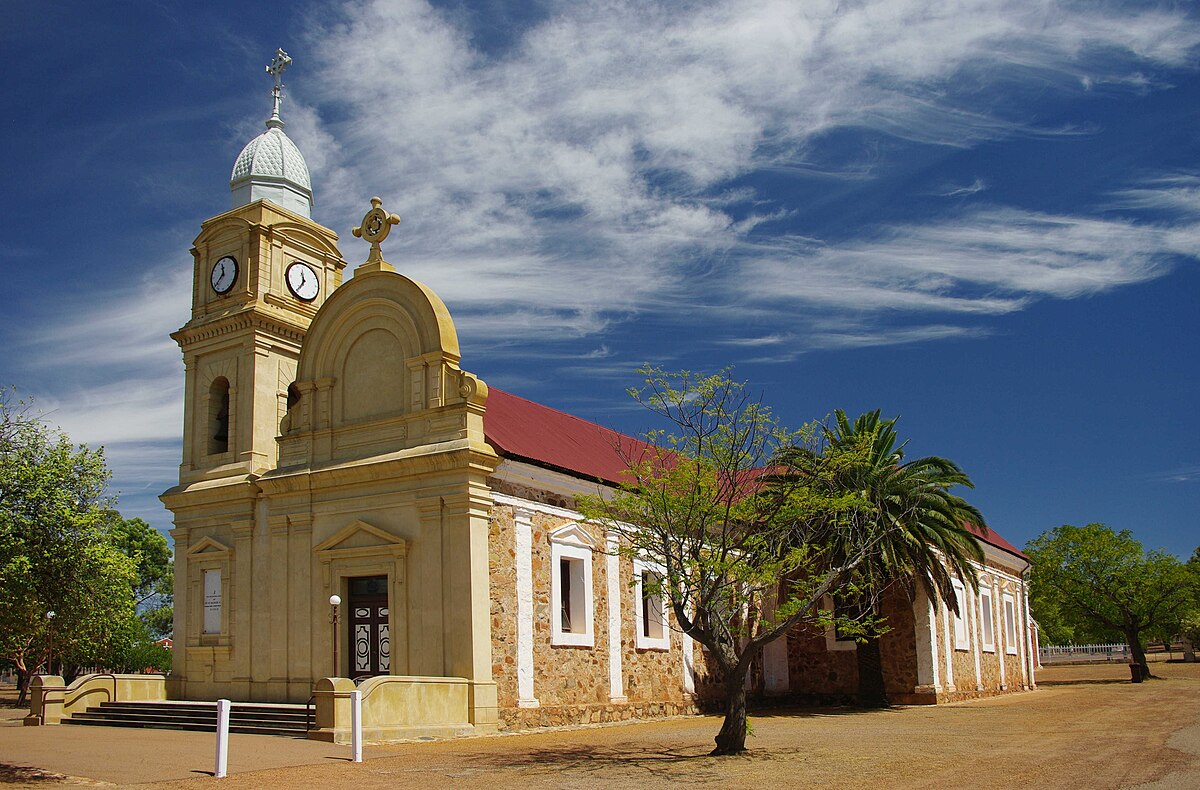
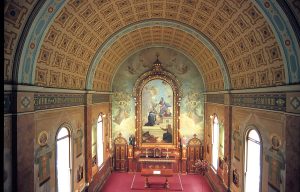
Still functioning today as a Benedictine Monastery, New Norcia possesses a number of churches and chapels, most notably the chapels in the old boarding schools of St Gertrude’s and St Ildephonsus’. The architecture, painting, and interior decoration of these chapels are a unique expression of Spanish design in the middle of the Australian bush. The buildings are beautiful without ostentation relying much more on the workmanship of the Benedictines than expensive materials.
Yet there is also a darker chapter to the history of New Norcia with which it is necessary to grapple. While the faith and extraordinary achievements of Rosendo Salvado and many of the priests and religious are undeniable, the monastery and its colleges featured all too prominently in the Royal Commission into Institutional Responses to Child Sexual Abuse. How one might separate the good of New Norcia from the bad (and the truly horrendous) is a complex and on-going question. It is also a question of the human condition more generally which can simultaneously harbour good and well as evil.
It would be a cliché to quote Solzhenitsyn here about the line of good and evil running through the centre of the human heart. Instead I will conclude in the hope that the churches and chapels of New Norcia might inspire us to emulate the sacrifices and vision of Salvado, while those darker chapters of its history might simultaneously inspire a reckoning and repentance of the sins of its past.