In July 2025, the Dawson Society was pleased to have hosted Marc Barnes, editor of the New Polity Journal of Postliberal Thought, and professor at the fledgling College of St Joseph the Worker in Steubenville, Ohio as a keynote speaker for our conference on the theme Home: Family. Place. Economics. As expected, Barnes gave a cracking talk, that was both learned and loquacious and which set the conference off on an incredible trajectory.
While he was here, one thing we asked Marc to do was to speak of the work of the College of St Joseph the Worker, and share something of their unique curriculum and underlying philosophy. Our hope was that such sharing would fire the imaginations of those in attendance—perhaps we could/should start thinking about such initiatives here in WA? For those who weren’t there, the College, which was recently profiled in the New Yorker, is an outgrowth of the work of the Institute for Political Philosophy and Theology think-tank, which publishes the New Polity journal and podcast. It is informed by the broad body of thought known as Catholic Social Teaching, which in the modern era was inaugurated by Pope Leo XIII with his encyclical Rerum Novarum: On New Things (1891). This body of teaching, which popes subsequent to Leo have made significant contributions, belies any attempt to section off the realm of ‘religion’ from the sphere of politics or economics and challenges not just Catholics, but all people of good will to think through the structures of the societies in which we live with a view towards the common good and the dignity of each and every person made in the image and likeness of God.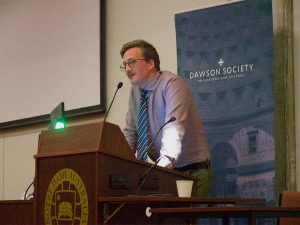
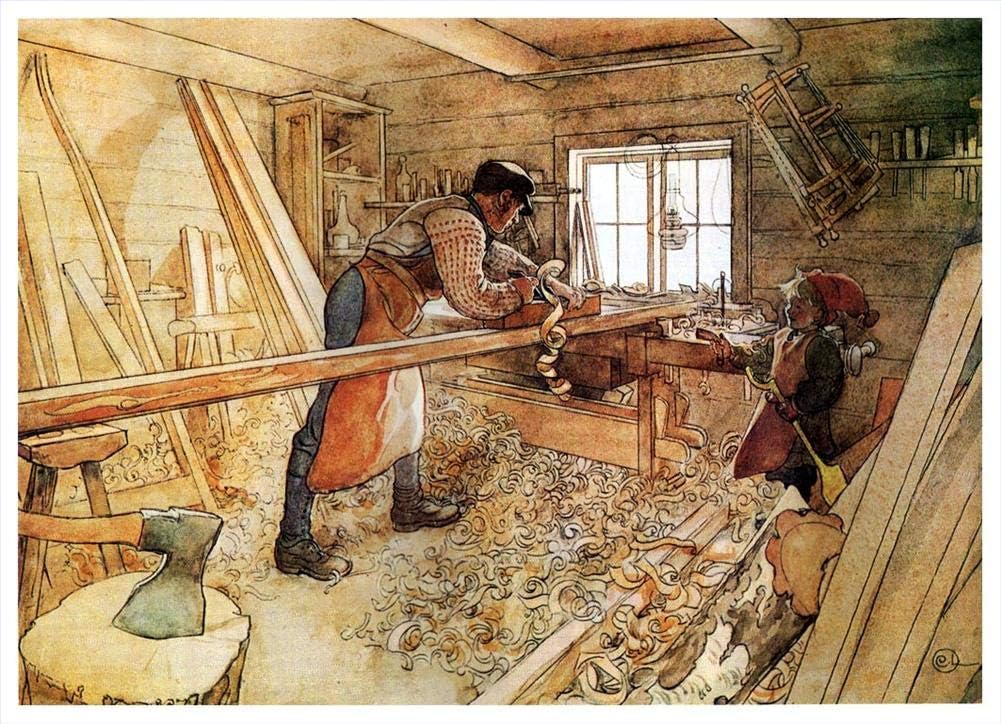
The College is unique in the higher education landscape in the US and indeed, around the world. It couples a strong education in what is traditionally known as the liberal arts focussing on philosophy, theology, history and literature, with training in the manual arts, providing graduates with both an arts degree and a formal trade in plumbing, carpentry, masonry, or HVAC. The vision underlying the College is one which cuts against the grain not just of the contemporary university/higher education sector, but against traditional understandings of the liberal arts from Aristotle to John Henry Newman. For Barnes and the others involved in this venture, the classical separation between the liberal and the manual arts is one which is perhaps not fitting to the Christian era. This is perhaps articulated most eloquently in the College’s promotional slogan: ‘The Word became flesh and picked up a hammer.’
Sociologically speaking there is a great deal that this educational model offers – debt free education, training for real work and employment in areas where there is a legitimate skills shortage. Theologically and spiritually, such a vision of education is more thoroughly adequate to a basic Christian anthropology which recognises the human person as a body-soul composite.
What Barnes and his colleagues are building in the ruins of the North American steel belt really is something new, a new polity so to speak. It is a vision of life that is cognisant of the reality of the human person as a relational, rational, and embodied creature that inhabits time and place. All this should give us pause and encourage us to ask what it is that we want from education.