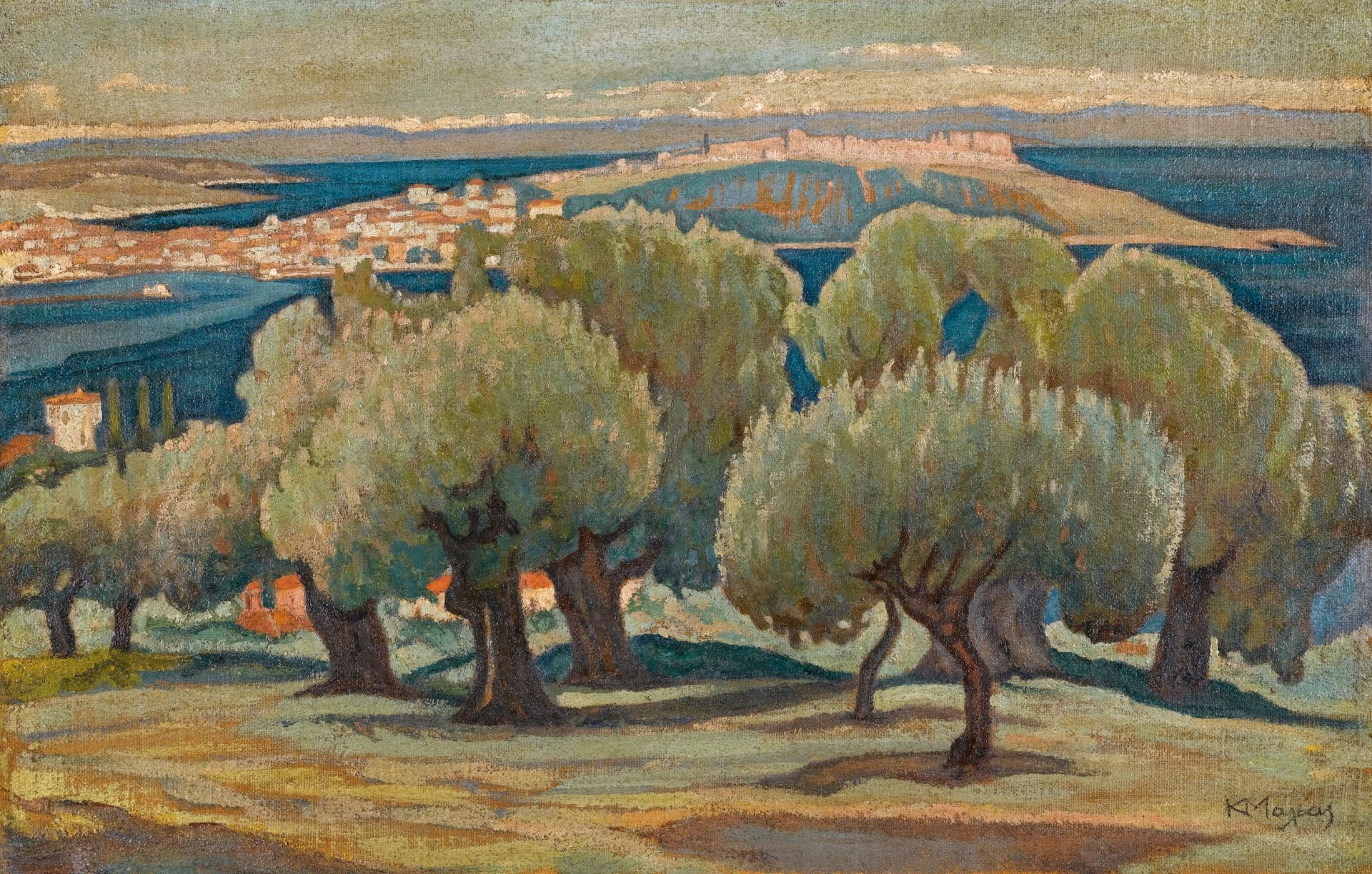
Late-April and May is olive season in my corner of the world.
A couple of years ago, my colleague Tom wrote eloquently about our attempt to establish a tradition of a yearly olive pick and oil press. You can read more about that here, and rest assured that this tradition is still going strong with 2026 marking our biggest pick to date (although the vagaries of weather reduced our overall yield of oil).
It seems to me that such traditions form something of a necessary antidote to a tendency within our modern world to ‘pigeon-hole’ the various parts or settings of our existence apart from each other. We moderns have a peculiar arrangement whereby our colleagues, friends, neighbours, parishioners, and family are (usually) entirely different sets of people, who seldom meet, and whose various roles in our lives rarely overlap.
In such a social context it is perhaps no surprise that there has been some commentary of a so-called ‘friendship recession’ with data indicating that both the average number of friends and the average time spent with friends has declined significantly in the past four decades. We humans are, after all, body and soul. Without some shared economic or material interest even the most spiritual of friendships can lose a binding force and an important (though by no means the most important) raison d’être.
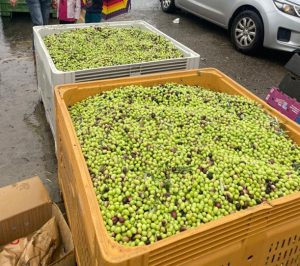
An olive pick and press offer a practical excuse to gather around a shared experience. The fruits of the labour (and nothing is quite as gratifying as cooking or dressing with oil one has produced) provide the motivation for an occasion that may be reasonably expected to feed the spirit as well as the body.
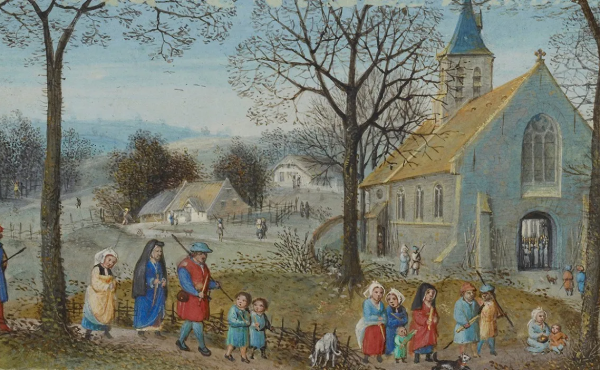
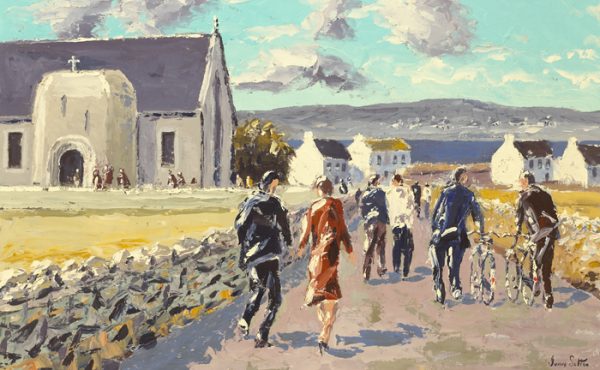
It is obviously no coincidence that a great deal of human culture is bound to agricultural practices that feed, clothe, and otherwise provision their communities. In Greek mythology, the city of Athens was named in honour of the goddess Athena, an honour she won through the creation of the olive tree as a source of oil, food, and timber. The story implicitly appreciates the necessary connection between communal identity and food. Athens, without the olive tree, could never have become Athens.
Yet this connection between a community’s identity and the provision of its most basic material needs is no longer as obvious as it was when a citizen might survey (or even farm themselves) the fields from which would come their sustenance. A good relationship with one’s neighbours (which, for almost all of human history, was a necessity for survival) seems in our contemporary context to be not only optional, but increasingly rare.
Whether this state of affairs is a desirable arrangement, I will leave to my readers to judge. Recent developments around the global supply of agricultural inputs (i.e. the closure of the Strait of Hormuz through which much of the diesel and petrochemical fertilizers needed for modern farming pass) has raised questions about the prudence of a distant and complex supply chain that relies solely upon the self-interested profit of its various parts almost all of whom are strangers to one another. Yet, for the moment at least, our supermarkets are well provisioned enough that the backyard or neighbourly production of food must be left to the nostalgic or the eccentric.
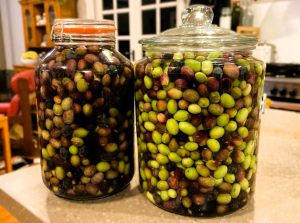
For those who wish to make the most of this olive season and who lack the quantity of olives required for oil, I will suggest instead the brining of table olives. Olives straight from the tree are too bitter to be edible. Their bitterness may however be cured (if you can pardon the pun) by a protracted soaking in a brine solution. Many techniques and recipes for this brining can be found online, but I have had most success with the following:
- Pick your olives avoiding bruised or damaged fruit. Olives can be brined at various degrees of ripeness any time after the fruit reaches its full size from ‘green’ to ‘black’ olives.
- Place your olives in a jar or other container and fill with fresh water. Drain and replace daily for three days.
- After three days in the fresh water, prepare a brine solution of one part salt[i] to ten parts water and cover the olives. Weight down the olives with a zip-lock bag filled with more of the brine solution to ensure all the olives are fully submerged.
- Check your brine solution once a week. If it begins to show signs of mould, drain the olives, rinse, and replace the brine solution. The more frequently the brine is replaced, the faster the olives will be ready.
- After a couple of months, you can begin tasting the olives for bitterness, if bitterness persists then continue to soak your olives. When you are happy with the taste, bottle in sterilised jars in a solution of two parts salt to five parts vinegar to twenty parts water. Pore a layer of olive oil on top of this solution to keep the olives from oxygen.
[i] NOTE: avoid salt with iodine or other additives. The curing process for olives involves a fermi natation from bacterial colonies present on the skins of the olive. Iodine will kill, or significantly disrupt, this process. Look for pure NaCl.