If the writing of Hilaire Belloc is still known today, it is most likely due to his works of history and Catholic apologetics. Yet Belloc’s greatest strength was probably his poetry and it is a shame that his verses are not more widely appreciated.
Belloc early poetry is marked by his comic verse especially his Cautionary Tales for Children (1907) which satires the Victorian penchant for morality stories with poems like “Matilda: Who told Lies, and was Burned to Death” and “Jim: Who ran away from his Nurse, and was eaten by a Lion.” Yet Belloc was capable also of more serious subjects as his 1923 poem “Ha’nacker Mill” shows.
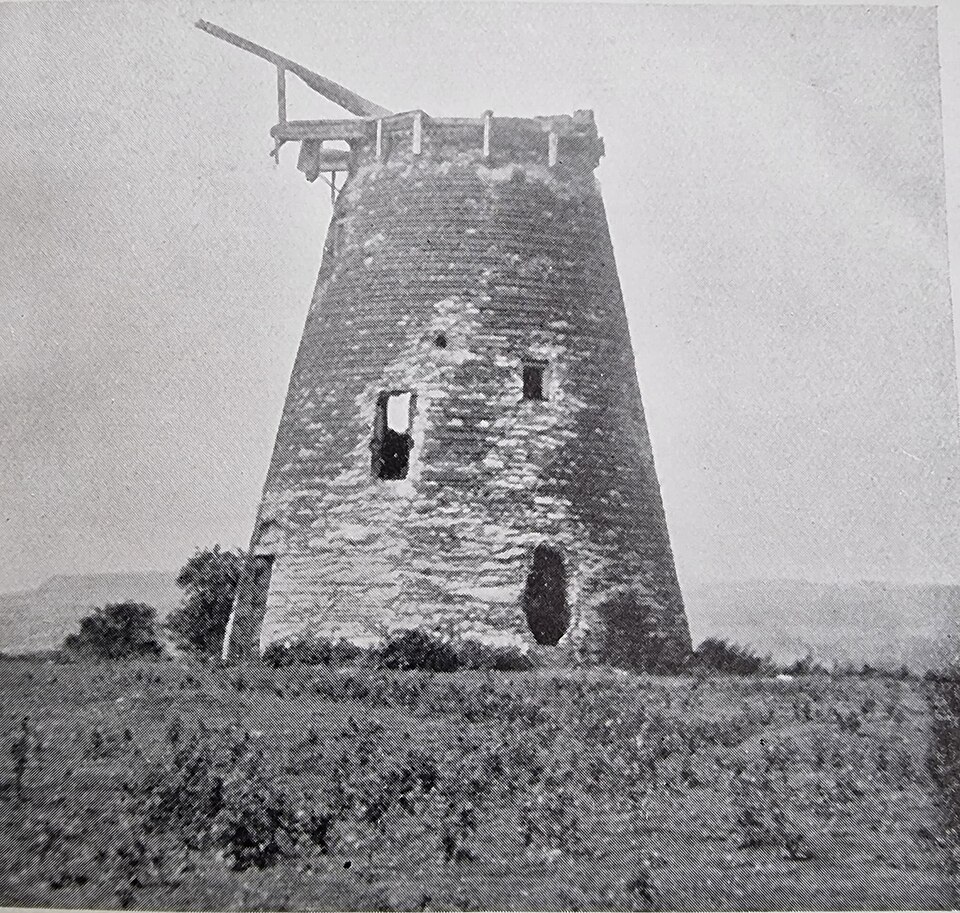
“Ha’nacker Mill” was inspired by the ruins of a working mill in Sussex that had been struck by lightning in 1905 and subsequently abandoned.[i] The invocation of the kindly ‘Sally’ who has gone from Ha’nacker Hill humanises this desolation. This absence is paired with a sort of post- Edenic symbol of a blindly growing briar subsuming the remnants of the once cultivated hill.
Belloc’s use of repetition in this opening verse, firstly with the phrase “Sally is gone” and after with the three lines beginning with the conjunction “And”, further connects the now silent mill with the absence of its human occupant. In doing so, Belloc frames the mechanism of the mill, with its “clapper” and “sweeps” as a human-scaled, agricultural oriented technology far apart (for instance) from the “dark satanic mills” of William Blake’s fame.
Ha’nacker Mill (1923)
Sally is gone that was so kindly,
Sally is gone from Ha’nacker Hill.
And the Briar grows ever since then so blindly
And ever since then the clapper is still,
And the sweeps have fallen from Ha’nacker Mill.
Ha’nacker Hill is in Desolation:
Ruin a-top and a field unploughed.
And Spirits that call on a fallen nation
Spirits that loved her calling aloud:
Spirits abroad in a windy cloud.
Spirits that call and no one answers;
Ha’nacker’s down and England’s done.
Wind and Thistle for pipe and dancers
And never a ploughman under the Sun.
Never a ploughman. Never a one.
These specifies of the desolate Ha’nacker Hill are broadened by Belloc into a wider critique of the ‘fallen nation’ of industrial England in the second and third verses whereby Ha’nacker Hill is used as a symbol of the de-peopling of the countryside and a lost mode of life.
The invocation of calling “Spirits” which “no one answer” is suggestive of a broad disenchantment (in sense of Max Weber’s 1917 lecture Science as a Vocation) which has taken a hold of England. Here modernity is positioned as a form of spiritual and economical rootlessness. The poem’s conclusion, “never a ploughman under the Sun. Never a ploughman. Never a one.”, links the economic state of England with its spiritual desolation, a familiar connection for readers of Belloc’s political and economic thought.
Indeed, the profession of ‘ploughman’ is a sort of invocation for the poem which calls to mind both the distributist back-to-the-land movement of the early twentieth century and the seminal middle-English poem The Vision of Pier’s Plowman.
Yet the poem’s mournful and desperate tone seems to hold little faith in the potential of either contemporary political movements or England’s historical and cultural roots to arrest the desolation it depicts. “Ha’nacker Mill”, instead functions a eulogy for a lost England whose like will never be seen again.
[i] The history of Halnacker Mill (Belloc’s ‘Ha’nacker’ reflects the Sussex pronunciation of Halnacker) can be read here. The mill has been restored since the dereliction recorded in Belloc’s lines and now stands as a historical monument. In spite, or perhaps even because, of this historical preservation, the topic and tone of Belloc’s poem still resonates.