A defence of private property feels dated. It seems to belong to the late nineteenth century or early twentieth when socialism was the new kid on the block and the cry, ‘Workers of the World, Unite!’, might issue from the mouths of actual workers.
From the post-war prosperity of the 1950s to the collapse of the USSR in the 1990s, the notion that workers might vote, strike, or otherwise agitate for an abolition of private property has become increasingly absurd. The era of ideologies is over. God is in his heaven, and all is right on this capitalist earth.
Private property has become an established, uncontroversial, and boring fact. Consequently, almost no one has any idea of what it is, what it is for, or how to justify it.
The now infamous claim[i] that in the future, “You’ll own nothing and be happy”, was met with dark premonitions of a conspiracy of global elites but with little positive argument for those who wished to justify owning something. Meanwhile, booming property prices and a growing gap between rich and poor have made the first part of that claim a growing reality for many[ii].
The absence of a positive case for private property, some might argue, is a natural consequence of having won the argument, but the old socialists were (in Australia at any rate) never a real threat to private property. The new enthusiasts of rentier capitalism are. They are a threat to private property which is widely held and economically accessible to most, if not all, citizens.
Readers may be familiar with the argument that property ownership operates as a hedge against government or corporate tyranny. This argument certainly has some excellent historical backing, but it is also a negative argument. Property is not defended for the good of ownership but for the perils of a lack of ownership. The ordinary individual’s private property deserves its own, positive defence. A defence that is inseparable from the right use of that property and that explains what private property is good for. And to argue this point, I am going to turn to the assistance of one Darryl Kerrigan, 3 Highview Crescent, Coolaroo.
Christ the King and Darryl Kerrigan
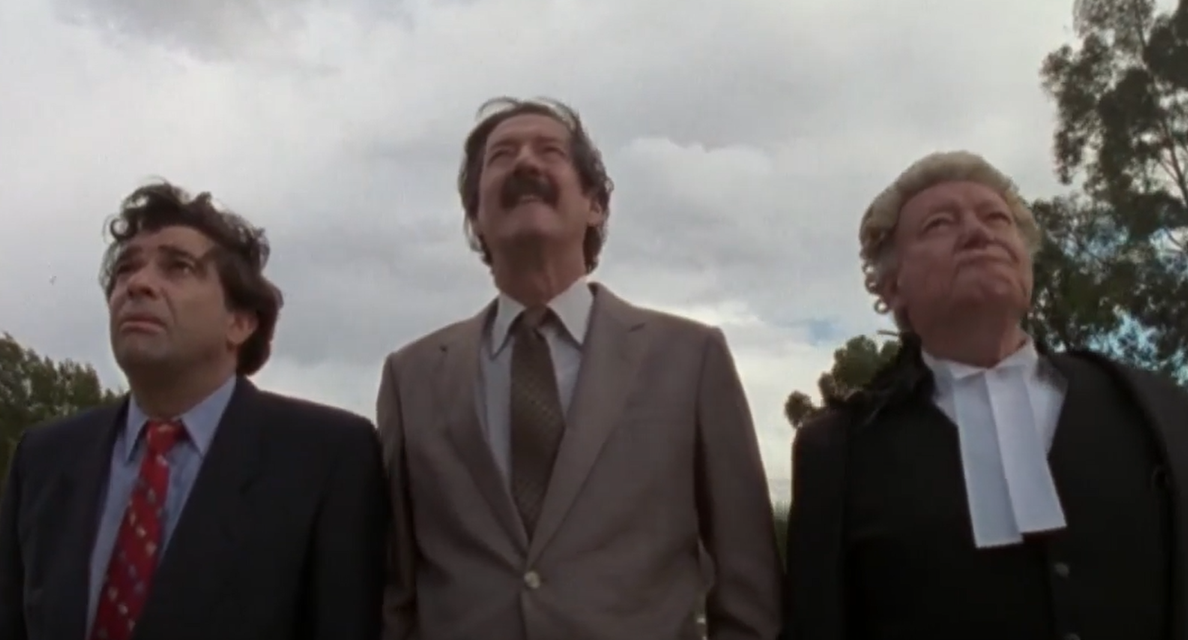
The 1997 comedy, and beloved piece of Australian cinema, The Castle follows the adventures of Darryl Kerrigan, a working-class family man whose improbable battle to save his home from compulsory purchase takes him all the way to the High Court of Australia. The film’s title derives from the expression that “an Englishman’s home is his castle.”
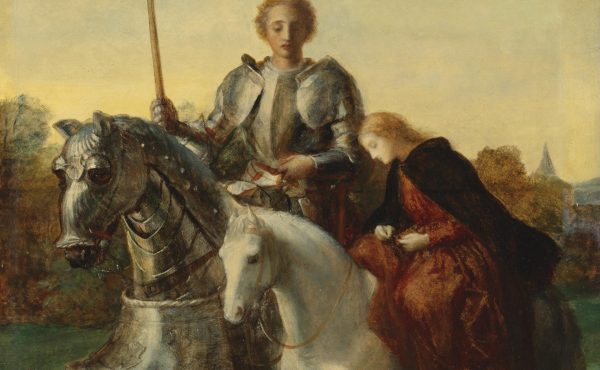
There is theological truth to this saying (which is quite apart from its original meaning). Castles are the homes of kings, and the Christian holds that all the baptised participate in Christ’s kingship.[iii] If he is baptised, then Darryl Kerrigan’s home is a castle. Not because he is an Englishman (he is not) but because he is a king. He participates in the kingship of Christ.
Property, privately held, is a good because it allows the owner to actualise this kingship. That is to exercise their judgement and power over that which they own. The private owner is a king because they can act. They can remodel, renovate or demolish. They can give, entertain or expel. They can dig holes. The tenant must ask permission to hang a picture. The owner may sponge paint the wall peach and blue – as was the case in one rental I lived in.
There are limits to this sort of ownership or control. Building codes, council regulations and strata rules all hedge in the modern owner and ensure that the parapets of his castle remain strictly metaphorical. Some restrictions are obviously sensible and justifiable. Many more are not. But private property is nevertheless an avenue through which the baptised – particularly the lay baptised – might practise their baptismal office of king.
Kingship, without power, is a meaningless title. The powerless king cannot fulfil their responsibilities. They are unable to serve others. A person who owns property has some means to act upon the world. Property is just, in this formulation, because it gives dignity to the title of king.
Private property is by no means the only avenue through which this kingship might be practised. But it is the most democratic – that is if it is distributed widely. Some years ago, my wife and I were driving through the suburbs in Perth when we passed a fence on which hung a variety of hubcaps. It was not my idea of art. I cannot imagine any strata committee authorising the display. But there it stood: an exercise of the judgement and power of the free man or (less likely) woman who owned it.
Property held in common is power prejudiced in favour of the articulate and the committee-minded.[iv] Whether an installation of hubcaps is a good use of property is not for me to say. And that is the point. It is a matter for the conscience of its owner (though it may also be a legitimate concern of the neighbour who has to look at it).
Private property is a practical acknowledgement that we cannot manage a people’s kingly vocation for them. It is a good and kingly thing when people are able to exercise their judgement for the service of others without having to first consult a committee or government body or a rentier capitalist. Even if they might get it wrong. To best facilitate this good, private property ought to be as widely distributed as possible. Hubcaps and all.
Shortly after we moved to our land, on a Sunday evening after a day spent hauling soil, I took a moment to look over the new garden beds. A bare paddock had been there just a couple of weeks previously. The place had changed. I had changed it. I had a very visceral sense that I, and only I, would have made the choices and decisions that had changed this patch of earth. It was, I hoped, made better by these choices. But it was certainly made different. And, in that moment, I was king.
The perils of ownership
There is a story in Wendell Berry’s A Place on Earth that has stayed with me. In it the youthful Virgil Feltner receives charge of some of the fields of the family farm. His father, Mat Feltner, watches in trepidation as Virgil ploughs the steep hillsides to sow a crop which is later destroyed by a hard spring rain. Mat recalls the hard conversation he had with Virgil in the aftermath: the failed crop and the eroded slopes that will take decades to recover their soil because of Virgil’s ignorance.
The power I have to change my own patch of land is a power to destroy as well as to create. And I am sometimes haunted by that possibility. That the fence posts I use might leach poison into the ground, that my firebreaks might erode the hillside, that the hooves of my sheep might compact the soil. Or, and much more importantly, that I become insular among my vegetables and animals and ignore my duties as a host, as a husband, and as a father.
If ownership makes us kings, then it can make us tyrants also. Tyrants through our ignorance and errors that will afflict the generations who inherit our soil. Or tyrants through selfish greed and insecure ambition.
The right practice of kingship is, in my reading, a recurring concern in the Gospels. The kingship of Christ is contrasted with two other models of king: King Herod (sometimes called Herod the Great) who is present at Jesus’ birth and Herod Antipas who is present at his death.
These two bookends of Jesus’ life represent failures of kingship in different directions. The king as tyrant (Herod the Great) and the king as hedonist (Antipas).
Herod the Great’s violent killing of the innocents of Bethlehem reveals both the mode and the goal of his kingship – a proto-Nietzschean will-to-power thoroughly detached from any higher purpose or service of others. His palace-fortress at Masada perfectly represents the temptation of property to turn inward, to become a means of oppressive control and status.
Herod Antipas is a much less serious figure than his father. The account of the execution of John the Baptist in the Gospel of Mark depicts a character besotted by dance, marked by hedonism and rashness, and with the added perversion of the dancer being his own stepdaughter. Far from the righteous king and faithful steward of what he owns, Herod Antipas offers half his kingdom for an evening’s entertainment (and settles for the head of John the Baptist).
The Herods, and those in their image, show us that the socialist of past decades was not wrong in his diagnosis of the evils of private property. It is a power that is open to abuse just as kingly power might be corrupted into tyranny. But the answer is not to abolish ownership. It is to redeem it.
If we are kings through our participation in Christ’s kingship, then we must practise our kingship in the model of Christ. And Christ’s title of kingship is the title beneath which he is crucified.
An objection
And it is here that a Christian socialist might raise an objection. On the cross, and throughout his ministry, Jesus owns nothing. He asks the rich young man to renounce his possessions and follow him. The early Christians held their goods in common. The Catholic Church (itself no traditional friend of socialists, Christian or otherwise) has a long tradition of religious orders who take vows of poverty. Does a monk or a nun not participate in the kingship of Christ? And how can property be justified by Christ’s kingship if he never owned anything?
Participation in the kingship of Christ obviously does not require private property. But it does require power. He whose Father could send a legion of angels to his defence, who healed the paralytic, and who raised Lazarus from the dead didn’t need a home or an income to serve others. It is true that on the cross Jesus dies apparently alone and powerless. But refraining from using power is not the same as being powerless. Likewise, property is good even for those who renounce it. It is good because they can renounce it.
A man or a woman who joins a religious order does not need a personal home or property. They are specific people, with specific gifts, called to a specific vocation: to freely given obedience to a religious superior. It is a renunciation (at least to some extent) of personal judgement. This cannot force those who are not called to a religious vocation to abdicate their kingly office. And the Church has not allowed its religious orders to renounce property entirely. The order provides the means by which the community’s service, and its participation in Christ’s kingship, is supported.
For most lay men and women however, private property is the most traditional, most practical, and most democratic means by which they can affect the world around them.
What property is for
The property we own is for the purpose of self-sacrificial love of God and neighbour.[v] Ownership is not for our own pleasure, our own power, or our own status. It is for us to judge how we might act in love. And it is a terrifying thought.
To own something is to inherit a tremendous responsibility over that thing. The very King of the Universe has lent you something for a particular purpose, and he is going to ask you to render an account of your ownership at the end of time.
The homeowner is not investing in an asset. He or she is charged with a noble duty. The kitchen table ought to be the setting of kingly hospitality where immortal souls daily greet each other as they ask for the salt and the pepper. The very paint and pictures of the walls are an opportunity to find beauty and show love. The backyard is a lord’s domain; the vegie garden is the farm that provisions the larders. The lawn and trees, a park where the castle’s inhabitants might rest, contemplate, and play. It is made by, and made for, the love of others.
Darryl Kerrigan is such a lord. His house is the embodiment of a Christian ownership. From its half-finished extensions to its plastic Victorian lacework, it is a house built for the love and service of his family and its neighbours. Darryl’s poolroom is his throne room. But its relics are far more valuable than treasures or the spoils of war. They are mementos of the love of each member of the household. Darryl’s defence of his house is that it is a home. It cannot be reduced to its material components or to an asset or investment. You can’t buy what Darryl’s got.
When Darryl Kerrigan is called by the Just Judge to render an account of 3 Highview Crescent, Coolaroo, he will hear the words – “Well done, good and faithful servant; you have been faithful over a little, I will set you over much; enter into the joy of your master.”
[i] Found in the essay “Welcome to 2030” by Danish politician Ida Auken and published by the World Economic Forum (WEF).
[ii] whose ‘happiness’ with this new arrangement is likely destabilising the political status quo across the Western world).
[iii] The First Epistle of Peter addresses believers in the following terms: “you are a chosen race, royal priesthood, a holy nation, God’s own people,[c] in order that you may proclaim the mighty acts of him who called you out of darkness into his marvelous light.” (1 Peter 2:9) The Epistle echoes the words of the Book of Revelation which emphasizes the royal office of Christians which is assumed in baptism, “you have made them to be a kingdom and priests serving[c] our God, and they will reign on earth.” (Revelations 5:10 The Catechism of the Catholic Church illuminates the offices of priest, prophet, and king in the light of scripture and tradition. It makes clear that the offices of priest, prophet and king belong to Jesus Christ and the faithful participate in these offices bearing “the responsibilities for mission and service that flow from them.” (CCC, 783)
[iv] And there are contexts in which this is thoroughly appropriate.
[v] In Catholic teaching, property is a second order good. It exists so that the owner might orient it towards its proper end – the universal destination of goods.